Free Legal Help in the US: Income Limits and Where to Apply
Test your household income against the 125 percent ceiling that federally funded legal aid programs use in 2026, see the limit for every household size, and find where to apply for a civil case, an immigration case or a criminal charge.
Updated
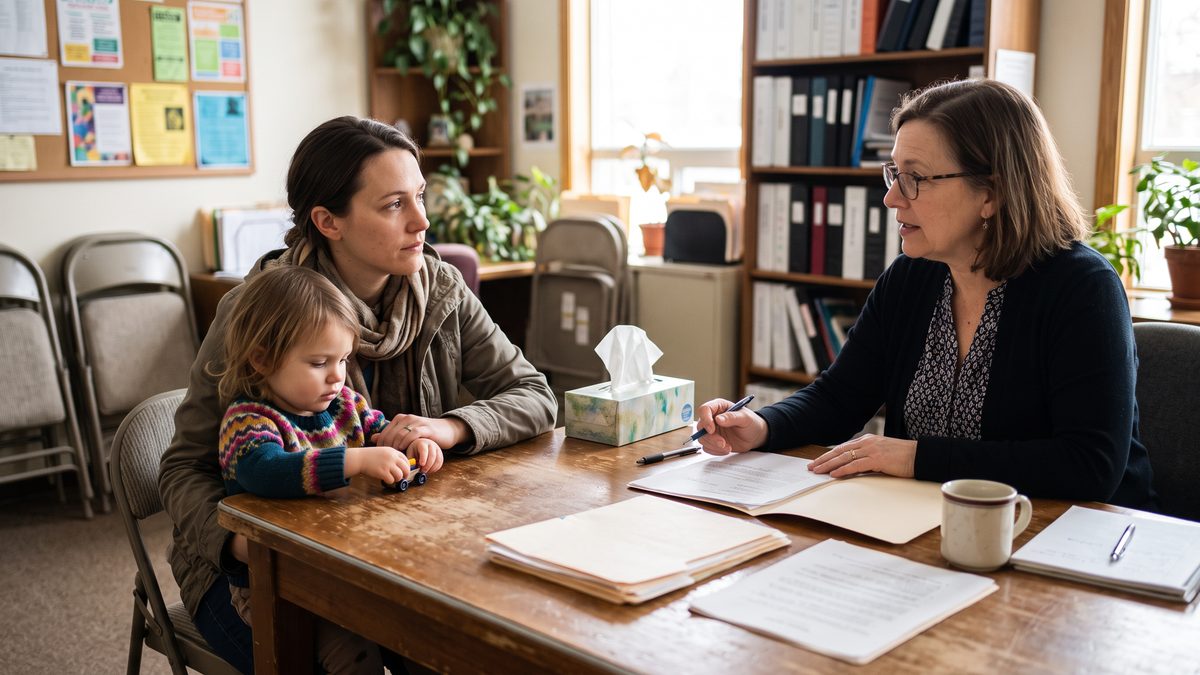
A legal aid program paid for by the federal Legal Services Corporation sets its income limit at or below 125 percent of the federal poverty guidelines as a rule, with exceptions up to 200 percent in situations the regulation lists. In 2026 the 125 percent line is $19,950 a year for one person and $41,250 for a family of four in the 48 states and DC. Earn less than that and a free civil lawyer may be possible. Earn more and there are still routes, mostly outside the free system. Criminal charges are a separate track, where a court can appoint a lawyer if you cannot pay.
Is your household under the usual income line?
Count everyone who lives on the household income. Use income before taxes for the whole year.
125 percent of the 2026 poverty line, household by household
Yearly income at or under these figures is within the ceiling that federally funded programs may use. The poverty guidelines are the HHS figures published on January 15, 2026. The 125 percent column is our own multiplication, rounded to the dollar, so a program's printed table may differ by a few dollars.
| People | 48 states and DC | Alaska | Hawaii |
|---|---|---|---|
| 1 | $19,950 | $24,938 | $22,950 |
| 2 | $27,050 | $33,812 | $31,112 |
| 3 | $34,150 | $42,688 | $39,275 |
| 4 | $41,250 | $51,562 | $47,438 |
| 5 | $48,350 | $60,438 | $55,600 |
| 6 | $55,450 | $69,312 | $63,762 |
| 7 | $62,550 | $78,188 | $71,925 |
| 8 | $69,650 | $87,062 | $80,088 |
| Each extra person | +$7,100 | +$8,875 | +$8,162 |
Three doors for a civil case
The LSC map
The Legal Services Corporation funds 129 independent nonprofit legal aid organizations across the states, DC and the territories. Its page lets you enter an address or city and shows the funded organization near you. That page also points to LawHelp.org for legal information and free forms.
Immigration help that is not a lawyer
The Department of Justice accredits representatives of recognized nonprofit organizations to help with immigration cases. They are not lawyers, but federal rules allow them to represent people before immigration authorities. A notary public is not one of them.
A lawyer at a lower price
If you are over the line, a firm may still offer a flat fee or a payment plan. Our price guide shows what firms post for common cases, and the license check shows how to confirm the person is allowed to practice.
A criminal charge changes the question
The Legal Services Corporation was set up by Congress to fund civil legal aid, so criminal defense is a separate track. If you face a criminal case and cannot afford a lawyer, the court is the place to ask. In Gideon v. Wainwright, the Supreme Court wrote that "lawyers in criminal courts are necessities, not luxuries" and required that a defendant too poor to hire a lawyer be given one, in the state criminal case before it. Ask the judge at your first appearance, and ask early: what counts as too poor, and which offenses qualify, depends on the court.
What we used and what we did not open
The poverty guidelines come from the HHS page. The 125 percent ceiling comes from the Legal Services Corporation regulation on financial eligibility, 45 CFR 1611.3, which says a funded program's income ceilings may not exceed 125 percent of the current guidelines. We read it as reproduced by Cornell's Legal Information Institute because the federal publishing site did not load for us on November 12, 2026.
We did not open LawHelp.org itself, which would not load from our network that day. We mention it only because the LSC page does.
Sources
- HHS ASPE, 2026 Poverty Guidelines.
- 45 CFR 1611.3, income level for individuals eligible for assistance.
- Legal Services Corporation, I Need Legal Help.
- Department of Justice, Recognition and Accreditation Program.
- Gideon v. Wainwright, 372 U.S. 335 (1963).
Written by the Lawyers List editorial team. Checked November 12, 2026. Not legal advice.